The most sustainable energy sources are renewable bioenergy (wood, biomass, energy crops), geothermal (deep or shallow), solar energy (photovoltaic, solar thermal), hydro and wind energy. Since much more, orders of magnitudes more, solar energy hits the earth than is required for human needs, the total potential of renewable energies seems to be almost infinite. It should be noted that, with respect to our discussion about energy here, the term "potential" is not the same as in physics (see Mechanical Energy). A better term would be "availability". Also, the terms "renewable energy" and "energy sources" do not make sense physically, since in physics the energy conservation law prohibits a source or renewal of energy; only transformations are allowed. From a physical point of view, it would be better to formulate this as "availability of sustainable energies" instead of "potential of renewable energies".
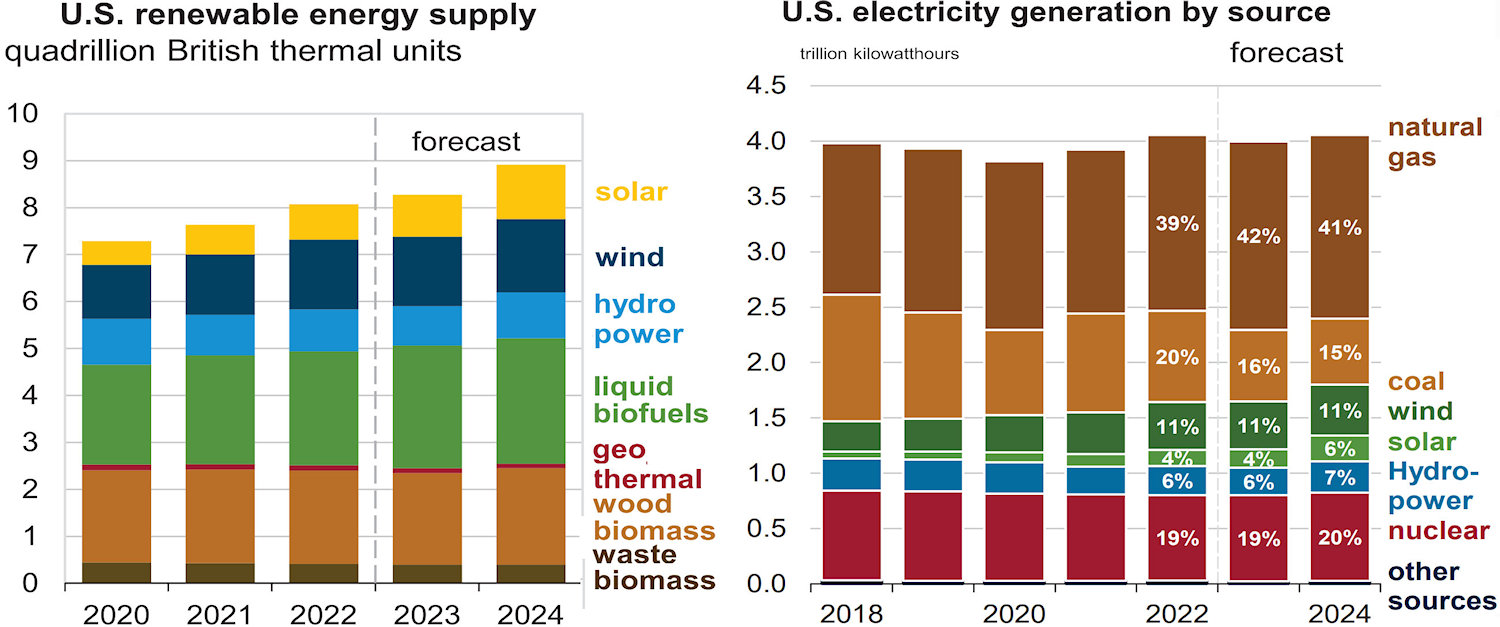
The Short-term Energy Outlook (release October 2023) of the U.S. Energy Information Administration (EIA) describes the primary energy contribution from renewable energy sources in the left figure above. The renewable energy share is now about 21% of the total U.S. total utility-scale electricity generation as shown in the right figure above.
The U.S. Energy Information Administration's (EIA) annual publications Annual Energy Outlook and International Energy Outlook focus on the factors that shape the energy system over the long term for the U.S. and the world, respectively. The outlooks go now until 2050 and include the expected potentials of renewable energies. The next figure was taken from the version October 2023 of the International Energy Outlook.
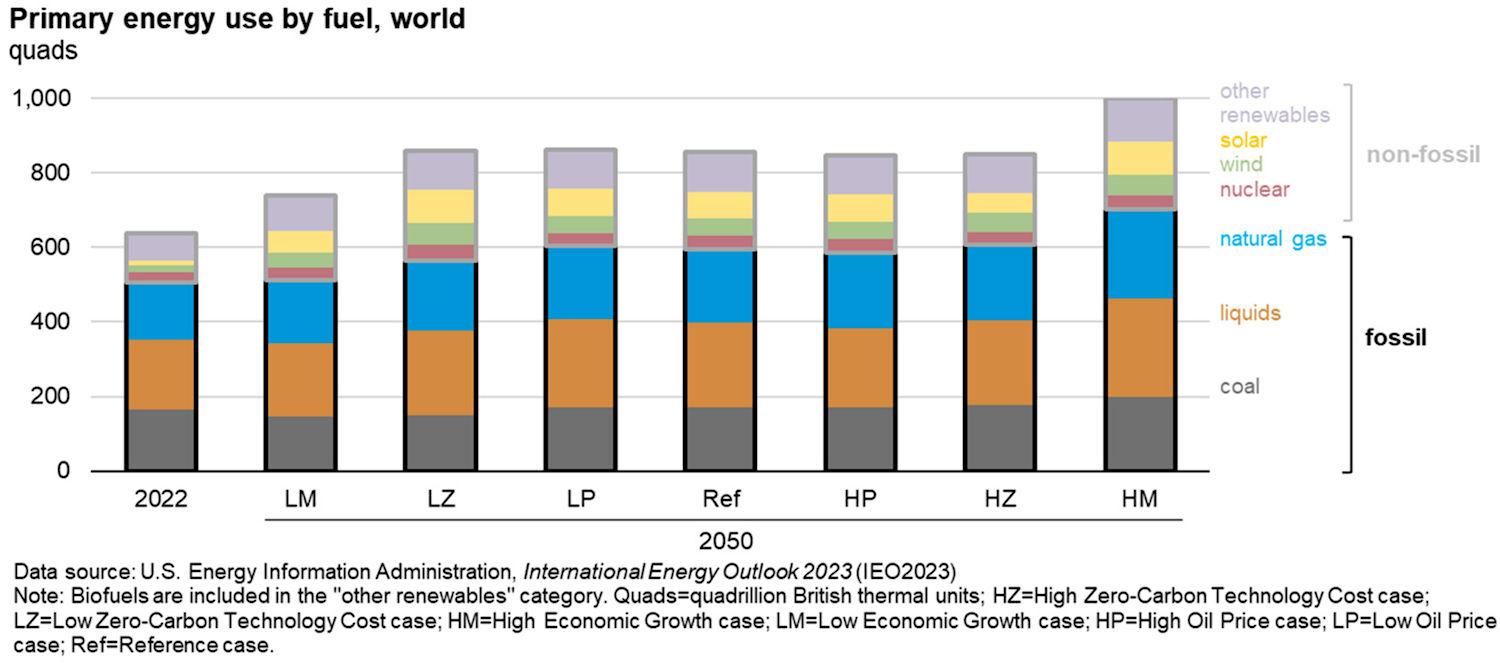
The figure above shows the different IEO2023 cases. The increased consumption coupled with current policy drive
non‐fossil fuel sources to gain a larger share of the increasing primary energy consumption worldwide.
Renewable energy consumption grows faster than any other energy source, and the non‐fossil fuel share of primary energy
grows from 21% in 2022 to a range of 29% to 34% in 2050 across the cases.
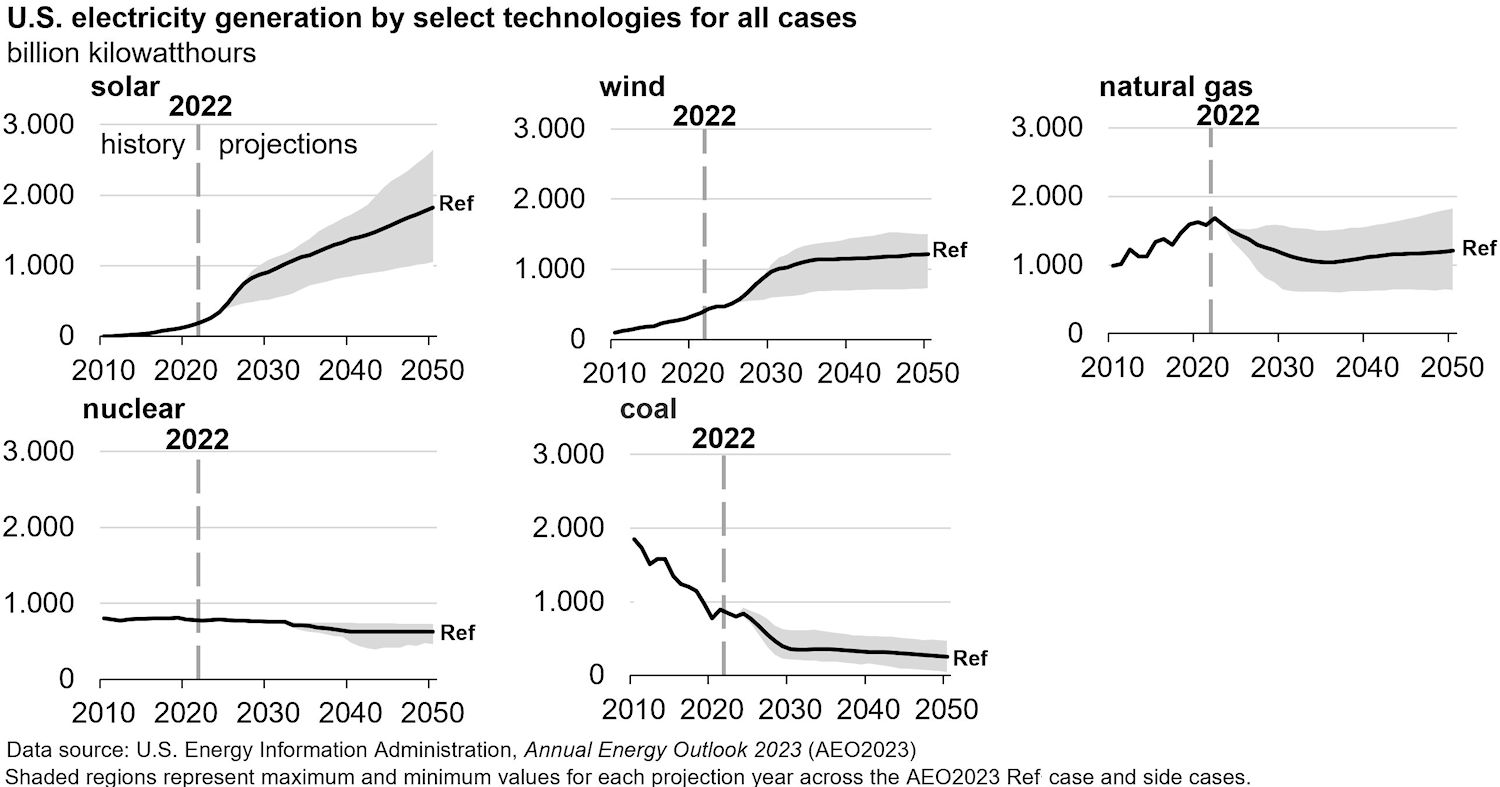
The figure above shows total electricity generation by fuel in billion kWh from 2010 to 2050, taken from
the version March 2023 of the Annual Energy Outlook.
Natural gas is an attractive fuel for new generating capacity, and by 2020 natural gas surpassed coal as
the nation’s largest source of energy for electricity generation. As natural gas prices rise and the capital costs
of renewable technologies, particularly wind and solar, decrease over time, renewable generation becomes more competitive,
accounting for about 40% of total electricity generation in 2050. Barring a breakthrough in electricity storage or
related technologies, renewable technologies cannot fully replace the baseload generation lost as a result of coal
and nuclear plant retirements. Wind will dominate after 2020 and finally wind and hydroelectric will be exceeded by
the solar energy. Although geothermal capacity more than triples in a projection, combined with biomass capacity
a low 4%-share of renewable electricity generation is expected for 2050.
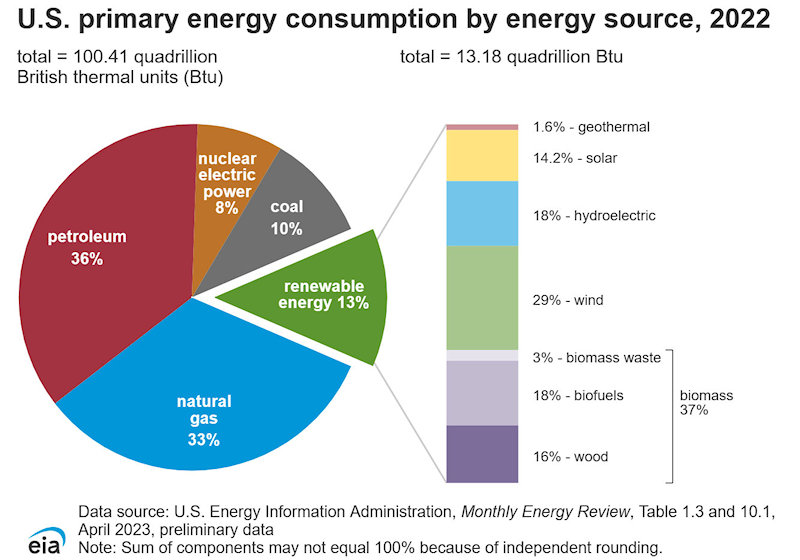
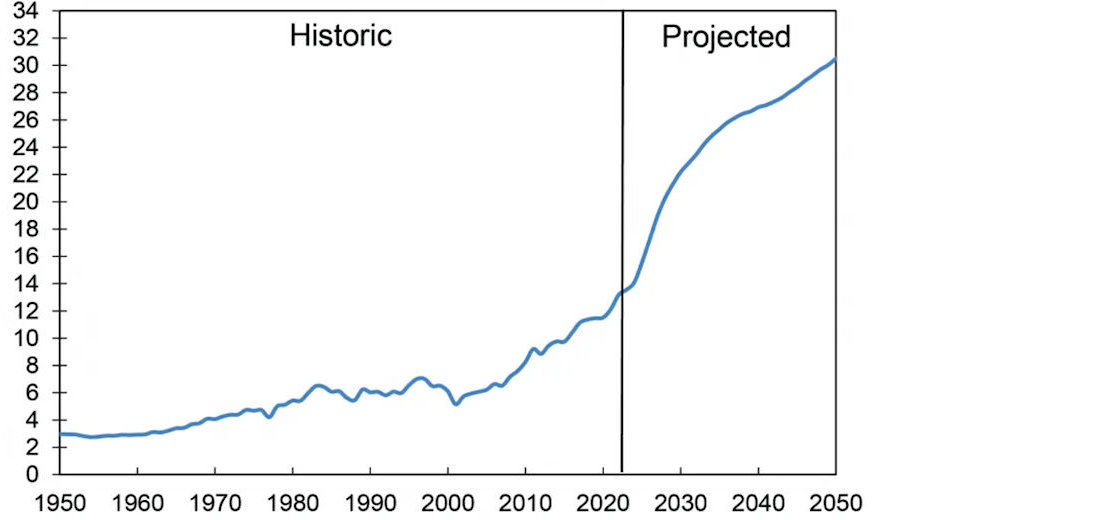
The figure at right was taken from eia. It shows primary energy use in quadrillion Btu in 2022 with a share of 13% of renewable energies. It is expected (picture below) that this share increases to about 30% in 2050, whereas the petroleum share of total primary energy does not vary drastically. Coal decreases as natural gas increases. On a percentage basis, renewable energy grows the fastest because capital costs fall with increased penetration and because current state and federal policies encourage its use.